Animation Project
Stop Motion Animation: Nick Park
As well as looking at Tim Burton's darker themed stop motion, I also adventured into the lighter side of stop motion animation with Nick Park's 'Wallace and Gromit' shorts, as well as his other stop motion projects, such as 'Chicken Run'.
Wallace and Gromit, Chicken Run and Creature Comforts are a collection of stop motion pieces created using clay models, putting it the the category of claymation, a sub category of stop motion. Claymation is Nick Park's most used style of stop animation and while most of his works are short animations, he has also created feature films 'Chicken Run' and 'Wallace and Gromit: Curse of the Were-Rabbit', with Chicken Run being his first feature length work.
His work is usually comedy oriented, though he doesn't always shy away from other themes and many of his animation shorts have received several awards and a popular following. Some of the awards received include BAFTA, Oscar and Emmy awards.
Park's work is a key example of high quality models and excellent animation processes merging together to create a well rounded piece of animation work.
Friday, 8 May 2015
Friday, 24 April 2015
Animation Research - Stop Motion Animation
Animation Project
Stop Motion Animation: Tim Burton
Tim Burton is an American director, artist and animator, who is known for his use of dark, and sometimes, morbid themes. Tim has had several of his films, such as Corpse Bride and Nightmare Before Christmas, become largely popular with a collective fan base of both adult and child audiences.

His animation work was what originally brought him to work at Disney, where he progressed from working on regular illustrated Disney films to his own dark stop motion animation. Though he uses both live action and animation methods for films he participates in, his stop motion films are among his frequently used and most popular works.
His very first self created animation project was the six minute stop motion piece 'Vincent', which was the gateway to more stop motion animation projects.
The following is quoted from Tim speaking about his experiences with animation and what inspires his use of it:
'There is an energy with stop-motion that you can't even describe. It's got to do with giving things life, and I guess that's why I wanted to get into animation originally. To give life to something that doesn't have it is cool, and even more so in three dimensions, because, at least for me, it feels even more real.
It was after Vincent, so I was really into stop-motion. I'd seen claymation, I'd seen stop-motion, the Harry Hausen things. On Vincent, we weren't trying to push the boundaries of great animation. What we were trying to do with it, in a very simple way, was be more specific with design. To me, in claymation the design elements get lost. So what we wanted to do was what you do in a drawing, but just spring it to the third dimension.'
Stop Motion Animation: Tim Burton
Tim Burton is an American director, artist and animator, who is known for his use of dark, and sometimes, morbid themes. Tim has had several of his films, such as Corpse Bride and Nightmare Before Christmas, become largely popular with a collective fan base of both adult and child audiences.
His animation work was what originally brought him to work at Disney, where he progressed from working on regular illustrated Disney films to his own dark stop motion animation. Though he uses both live action and animation methods for films he participates in, his stop motion films are among his frequently used and most popular works.
His very first self created animation project was the six minute stop motion piece 'Vincent', which was the gateway to more stop motion animation projects.
The following is quoted from Tim speaking about his experiences with animation and what inspires his use of it:
'There is an energy with stop-motion that you can't even describe. It's got to do with giving things life, and I guess that's why I wanted to get into animation originally. To give life to something that doesn't have it is cool, and even more so in three dimensions, because, at least for me, it feels even more real.
It was after Vincent, so I was really into stop-motion. I'd seen claymation, I'd seen stop-motion, the Harry Hausen things. On Vincent, we weren't trying to push the boundaries of great animation. What we were trying to do with it, in a very simple way, was be more specific with design. To me, in claymation the design elements get lost. So what we wanted to do was what you do in a drawing, but just spring it to the third dimension.'
Typography Project - Cave Paintings
A Brief History of Type
Cave Paintings
Cave Paintings
One of the first instances of written
communication were pictograms and among the first pictograms to be used were
cave paintings.
Cave paintings can be found all over the
world, some dating back to almost 40,000 years ago. As the age of these
paintings coincides with a time where Neanderthals still populated the Earth,
it is believed that some of these paintings were created by them, as well as by
Humans. Scientists often use the method of creation to determine how old the
paintings are. Pigments used include red and yellow ochre, hematite, manganese
oxide and charcoal.
The real purpose of these paintings are unknown,
though most theorise that they may have been used in rituals, to communicate
and decorate homes, amongst other things. Common Subjects of these paintings
are usually various wild animals, although ‘hand stencils’ are also seen in
some caves. Any depictions of humans are rare and when seen are very vague,
lacking detail, unlike many of the animal paintings. Many purpose that this is
because of a potential religious taboo that perhaps strictly forbids the
painting of humans.
Henri Breuil, a French archaeologist and
geologist, interpreted many of the animal paintings to be a form of ‘hunting
magic’ believed to have been practiced to increase the population of local
wildlife.
Another man, David Lewis-Williams, a South
African scholar, theorised that these pictograms may have infact been created
by paleolithic shamans. He believed that these shamans moved into deeper
recesses of the caves to enter a trance state and paint their visions.
Many of the more well known cave paintings originate
from Europe, mostly France or Spain, though there are known instances of cave
paintings appearing elsewhere across the globe, including a site called
Creswell Crags in Nottinghamshire, England.
Labels:
Artwork,
Cave,
Design,
Graphic,
History,
Illustration,
Manual,
Paintings,
Project,
Research,
Traditional,
Type,
Typography
Typography Project - DADA Movement
A Brief History of Type
DADA Movement
Although Dada originated in Zurich (Switzerland), it soon spread to
become an international movement, with artists from all nationalities taking
part in its creation. It was not seen as an art movement until long after it’s
time, when it disbanded. Dada has been known to have influenced surrealist and
constructivist works.
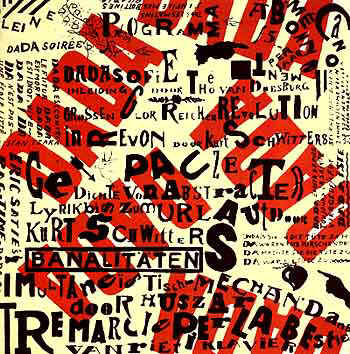
DADA Movement
DADA was a 19th century art movement that was created around
1916 and focused on World War 1. Artists involved would often express their
views on the war through their work, seeking to provoke reactions in their
observers. Their art work was often seen as a form of protest or retaliation
against parties they felt were responsible for the war.
Dada work usually involves type or collage type works that lack logic
and were often abstract. Type based art had letters and words scattered across
the page while images were made into collages that were overlaid with one
another.
Tristan Tzara
Tristan was a Romanian born, French Dada artist and poet who created
the first Dada type works, including La
Première Aventure céleste de Monsieur Antipyrine (The First Heavenly Adventure
of Mr. Antipyrine), 1916 and Vingt-cinq poèmes (Twenty-Five Poems), 1918.
Before
the end of World War 1, Tristan became the main promoter of Dada and continued
to manage its progression to other regions of Europe.
He later moved on to create
surrealist works and was very active during WW2 and joined French Communist Party in 1937.
Typography Project - Bauhaus
A Brief History of Type
Bauhaus

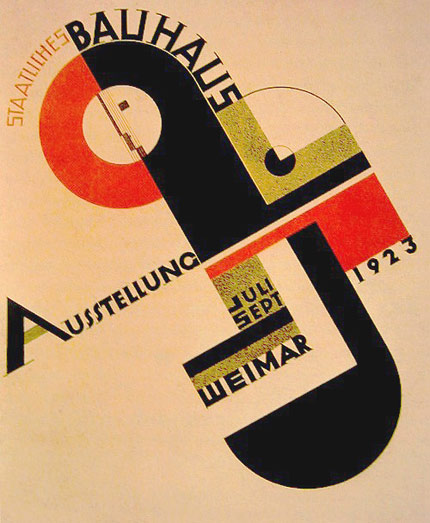
Bauhaus combined fine arts with crafts to create most
of their works. The signature styles of Bauhaus usually include a diagonal
slant, overlaid patterns and a combination of vertical and horizontal text.
Reoccurring colour schemes are often red, black and white or cream, though
other colours, such as blue, have also been used.
Bauhaus
Bauhaus is an art school first located in Weimar,
Germany that was founded by Walter Gropius, an architect. Despite being founded
by an architect, Bauhaus had no architectural department during its first few
years. The name ‘Bauhaus’ literally means ‘House of Construction’ or ‘School of
Building’. It existed from 1919 until 1933 and moved several times from Weimar
to Dessau and then to Berlin.
Although Bauhaus mostly remained apolitical, the
pressure of politics still affected it heavily, with the Nazi party especially
pushing for its closure.
Artist Research - 4
Drew Struzan
Photomontage/Book Cover Project
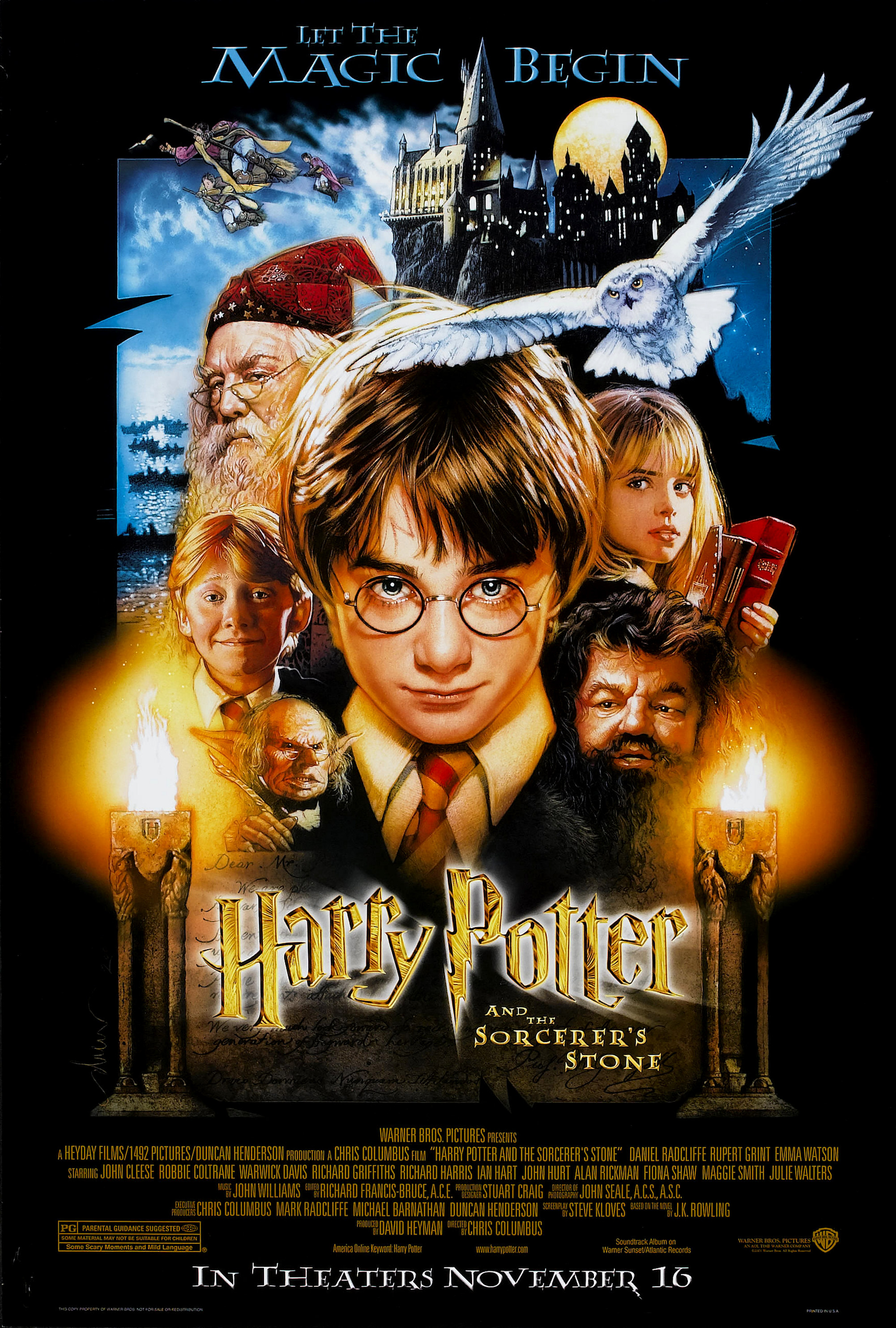
Drew Struzan is an American artist who is best known for his movie poster work, though he has created artwork for album covers, book covers and collectables. Many popular films, such as the Indiana Jones series and Star Wars, have had artwork painted by Drew.
He uses illustration and painting to create his work, which often takes weeks to complete. Work he creates uses a photomontage style and contains the images of several characters and/or scenes that appear in the film. The style of work is also fairly easy to recreate digitally. This means it is ideal for book cover use, for which I am using his work as a reference during my book cover design project.
Though this style of work is not limited to Drew, he almost exclusively uses it in his work. Many movie poster artists stylise their work in this way, though they often use digital means to create their work. If I were to recreate this style in my book cover work, I would also use a program, such as Adobe Photoshop.
In the photomontage project, I created a few photomontage pieces. While they were slightly different from Drew's work, they captured the same elements, such as including characters and scenes in the work.
Photomontage/Book Cover Project
Drew Struzan is an American artist who is best known for his movie poster work, though he has created artwork for album covers, book covers and collectables. Many popular films, such as the Indiana Jones series and Star Wars, have had artwork painted by Drew.
He uses illustration and painting to create his work, which often takes weeks to complete. Work he creates uses a photomontage style and contains the images of several characters and/or scenes that appear in the film. The style of work is also fairly easy to recreate digitally. This means it is ideal for book cover use, for which I am using his work as a reference during my book cover design project.
Though this style of work is not limited to Drew, he almost exclusively uses it in his work. Many movie poster artists stylise their work in this way, though they often use digital means to create their work. If I were to recreate this style in my book cover work, I would also use a program, such as Adobe Photoshop.
In the photomontage project, I created a few photomontage pieces. While they were slightly different from Drew's work, they captured the same elements, such as including characters and scenes in the work.
My photomontage using characters and scenes from the game 'Dark Souls'
Above is my photomontage, inspired partly by Drew's work, though it uses more of a blended approach than his work. I felt that perhaps, in hindsight, my work could be cut a little so that the characters are more defined and fit together better.
If I choose to incorporate Drew's style in to my book cover work, I will use this previous example of my work to further better suit my work for the cover of a book.
Labels:
Album,
Artwork,
Book,
Covers,
Design,
Digital,
Drew,
Graphic,
Illustration,
Painting,
Photomontage,
Process,
Project,
Struzan,
Style,
Traditional
Friday, 17 April 2015
Artist Research - 3
Laz Marques
T-Shirt/Book Cover Design
During the T-shirt design project earlier in the year, we were asked to research from a list of artists, from which I picked out Laz Marques.
Laz is an American designer, who is best known for his re-imaginings of movie posters, both old and new. He studied at various art institutes in America, such as the School of Visual Arts (New York) and the Art Institute of Philadelphia, where he majored in Fine Arts and Graphic Design. At present, Laz spends most of his working time creating advertisements for companies like Verizon, amongst others. When he is not working in advertisement, he is pursuing work in the entertainment industry, where he recreates movie posters.
Laz's work is usually recognisable from it's silhouette incorporated designs, though he is shown to have worked with basic shapes to create work.
This style of work was ideal for the t-shirt project, as these easy to create shapes can transfer from one media to another very well and keeps the visual appeal, even in different formats. This meant that Laz's work was easy to apply to both t-shirt design, and later, book cover design.
As books are often precursor to films and t-shirts follow on from films as a way for fans to present what they like, this means that the art created for them has to be representative of what happens within the story, whether the art depicts characters, scenes or events from the story. Work created by Laz fits this very well.
His style allows for the use of character and object silhouettes from the films he does work for, which accurately or symbolically represents the content of the film. This means it can be applied to book covers as well.
The simplicity of the images also allows for several ways to create them, including digital or manual processes. I feel that a manual process like print making/screen printing would be perfect for these types of images, though it would be just as viable to make similar images using digital software like Adobe Illustrator and Photoshop.
Laz's work will continue to inspire my work, especially in my current project of book cover design.
T-Shirt/Book Cover Design
During the T-shirt design project earlier in the year, we were asked to research from a list of artists, from which I picked out Laz Marques.
Laz is an American designer, who is best known for his re-imaginings of movie posters, both old and new. He studied at various art institutes in America, such as the School of Visual Arts (New York) and the Art Institute of Philadelphia, where he majored in Fine Arts and Graphic Design. At present, Laz spends most of his working time creating advertisements for companies like Verizon, amongst others. When he is not working in advertisement, he is pursuing work in the entertainment industry, where he recreates movie posters.This style of work was ideal for the t-shirt project, as these easy to create shapes can transfer from one media to another very well and keeps the visual appeal, even in different formats. This meant that Laz's work was easy to apply to both t-shirt design, and later, book cover design.
As books are often precursor to films and t-shirts follow on from films as a way for fans to present what they like, this means that the art created for them has to be representative of what happens within the story, whether the art depicts characters, scenes or events from the story. Work created by Laz fits this very well.
His style allows for the use of character and object silhouettes from the films he does work for, which accurately or symbolically represents the content of the film. This means it can be applied to book covers as well.
The simplicity of the images also allows for several ways to create them, including digital or manual processes. I feel that a manual process like print making/screen printing would be perfect for these types of images, though it would be just as viable to make similar images using digital software like Adobe Illustrator and Photoshop.
Laz's work will continue to inspire my work, especially in my current project of book cover design.
Friday, 20 March 2015
Artist Research - 2
Ronald William 'Josh' Kirby
Book Cover Design
The final major project is focused on the concept and design of book covers and our end goal is to create one of our own.
While investigating and researching book covers and their layout design, I began to look at fantasy style novel covers as a main source of inspiration. One such sequence of books included Terry Pratchett's Discworld series, whose covers were illustrated by British artist Josh Kirby.
Ronald William Kirby acquired the nickname 'Josh' at his time at the Liverpool City School of Art and since then was rarely referred to by his real name. He is known for the illustration and painting of over 400 pieces of work, many of which served as film posters, magazine and book covers, amongst other things. His work for the covers of the Discworld series is widely known, though he has produced work for other famous projects, such as Monty Python's The Life of Brian and Star Wars Episode VI. He often spent time producing work for his Voyage of The Ayeguy portfolio, when he was not doing work for others.
A piece of work Kirby created for the cover of Terry Pratchett's 'Small Gods' book from the Discworld series
Kirby's paintings and illustrations are often very detailed and his work on Discworld book covers include several figures on large, intricate backdrops. His style of illustration makes the artwork look busy and alive with motion, like the characters are in the midst of action. The colours used are vibrant, especially on his book cover works.
Work from Kirby's own 'Voyage of The Ayeguy' portfolio
I felt that his work was chosen for book covers because of it's eye-catching colours and detail. This was a very traditional way of producing artwork for book covers, compared to the more recently large market for digitally processed and enhanced imagery that we have today. At the time of some of the earliest published Discworld books (1983 - onwards), technology was not as advanced as it is at present, so digital enhancement was not possible.
Studying Kirby's work has helped me to understand what is needed to create interesting book covers, without digital help.
Artist Research - 1
Olly Moss
T-Shirt Design Project
In many of our projects, we are given several artists to look at to help us generate ideas. One of the many artists that continue to influence my work is Olly Moss, a British graphic designer. His work has been helpful to analyse and has helped the development of my work in several projects to date. Olly Moss' main focus for his work is producing film, game and book related poster re-imaginings.
I admire most of the work he creates and I find his use of silhouettes very interesting, as he often uses them in conjunction with one another to create larger images. These pieces of work greatly fit in with the t-shirt project amongst others, as the style they use is ideal for t-shirt design. Many of his posters are created using screen printing techniques and it appears to be his favoured method for creating his artwork.
His style is easy to recognise amongst other art works and has a unique appearance. His work has inspired much of my work and will continue to for future projects, both professional and casual.
Tuesday, 27 January 2015
Photomontage Project - Album Covers
CD Cover Research
As part of the photomontage project, we were asked to research into pre-existing album covers. I tried to look into varied styles so as to get a general idea of what the main features of an album cover consist of and what the common traits are between them.
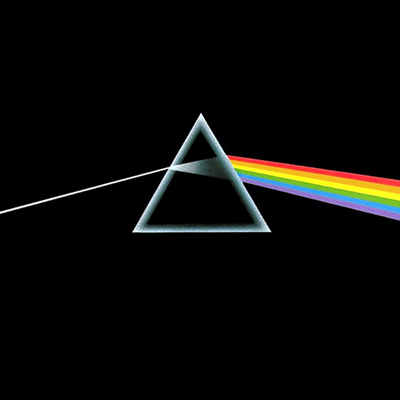
Album covers are not constrained to one type or style of art, instead they allow room for creativity. While some album covers relate to the songs contained within or even the name of the album, others display artwork that is simply eye-catching. Though there is a free rein to create in album cover design, genres of music often inspire certain styles of art.
For example, pop or electronic genres usually have a lot of colour on them, sometimes contrasted by a dark background while rock/metal genres use more murky and dark colours to fit their theme.
| Pop Example |
| Metal Example |
Though this mostly applies to modern album covers, it is a trend also followed by older cover artwork. With the development of digital work, modern covers can often feature photo manipulation and other added effects while older work contains art created by hand or photographs of the music artists.
When it came to creating my own album covers, I tried to keep to this at the forefront of my designs. I decided that it would help to create a made up band 'Cypher' and give it a genre of electronic music so that I could aim for a specific style that would suit the theme of the music. I noticed a lot of covers of that genre feature vibrant (usually rainbow or spectrum) colours contrasted with a dark or black background. From this, I created several covers that I felt fit these themes.
My work:
Although I liked all of these covers, my final design was very different. For my final design, my background was white and contrasted with the main image, which had dark green and blue colours. I think both the skull and the colours I chose fit the genre of music I decided to aim for.
I think that I achieved what I set out to do with this part of the project and I enjoyed using the freedom in creativity that album covers provide to experiment digitally and expand on ideas. I believe that this experimentation helped me when creating other digital work in the following projects.
Subscribe to:
Posts (Atom)